
2026-10-11 · Maria Rodriguez
Why Clay Soils in Whittier Increase Slab Leak Risk
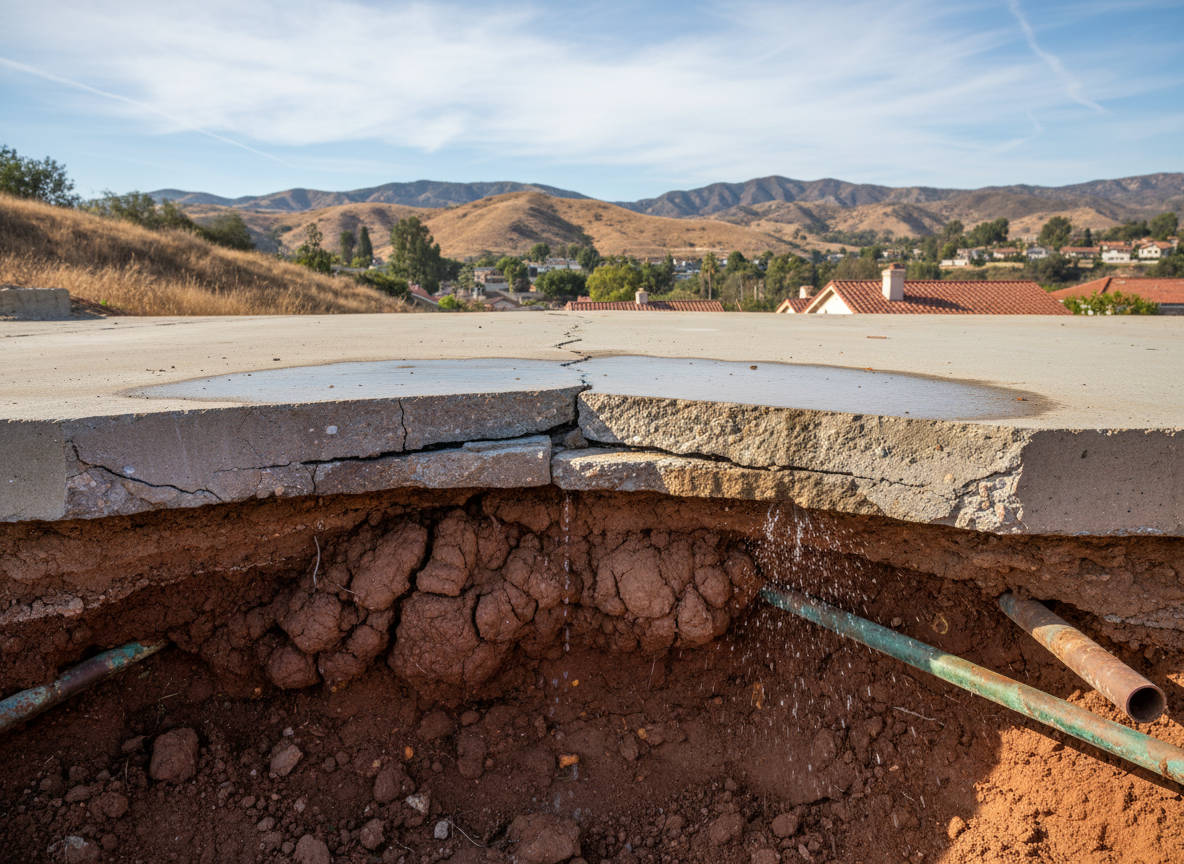
Whittier's clay soils significantly increase the risk of slab leaks by retaining moisture, leading to soil expansion and contraction that stresses underground pipes. This constant movement can cause pipes to crack or rupture, often requiring emergency slab leak detection. The unique Mediterranean climate of Los Angeles County, with its hot, dry summers and mild, occasionally wet winters, exacerbates this issue. During the dry season, the clay soil compacts and cracks, creating voids. When winter rains arrive, even mild ones, the soil rapidly absorbs moisture, expanding dramatically. This cyclical swelling and shrinking places immense pressure on the concrete slabs and the plumbing embedded within them, making homes in areas like Uptown Whittier, East Whittier, and the Whittier College Area particularly vulnerable.
Understanding Whittier's Clay Soil Composition
The geological makeup of Whittier, especially in areas surrounding landmarks like Rose Hills Memorial Park and extending towards Whittier Narrows, is characterized by a high percentage of expansive clay. Unlike sandy soils that drain quickly, clay particles are much smaller and packed more tightly, allowing them to hold onto water for extended periods. This characteristic is a double-edged sword for homeowners. While clay can be fertile for landscaping, its propensity to undergo significant volume changes with varying moisture content directly impacts foundation stability and underground plumbing. The consistency of this clay can range from soft and pliable when wet to rock-hard and fissured when dry, creating a dynamic and challenging environment for residential structures built on slab foundations.
The expansive nature of these soils means that a home's foundation is constantly subjected to forces from below. As the soil swells, it pushes upward on the slab; as it dries and shrinks, it pulls away, potentially leaving parts of the slab unsupported. This differential movement, over years of seasonal changes, can lead to hairline cracks in the concrete slab itself. More critically, it can cause the copper or PEX pipes embedded within or beneath the slab to flex, rub against the concrete or aggregate, and eventually fatigue and fail. This constant stress is a primary reason why many older homes in the Hadley Greenleaf Historic District, built decades ago, are now experiencing slab leak issues.
How Soil Movement Impacts Underground Pipes
The relentless cycle of expansion and contraction in Whittier's clay soils directly translates into mechanical stress on your home's plumbing system. When the soil expands, it exerts upward pressure on the concrete slab, which in turn can compress or bend the pipes running through it. Conversely, as the soil dries and shrinks, it can create voids beneath the slab, leaving sections of pipe unsupported. This lack of uniform support allows pipes to sag or shift, making them susceptible to kinking or fracturing. Over time, this repeated stress can lead to micro-fractures in copper pipes, or abrade the outer layers of PEX, eventually causing a leak.
Furthermore, the presence of small rocks and aggregate within the clay soil can act as abrasive agents. As the soil moves, these particles can rub against the pipe surfaces, slowly wearing them down. This is particularly problematic for copper pipes, which can develop pinhole leaks from such abrasion. PEX, while more flexible, can also be compromised if subjected to sharp or continuous pressure points. The result is often a slow, insidious leak that may go undetected for weeks or even months, silently causing damage to your foundation and property. Early detection, often through methods like <a href="/services/electronic-acoustic-leak-detection">Electronic Acoustic Leak Detection</a>, becomes crucial to mitigate extensive damage.
Signs of a Slab Leak in Clay Soil Areas
Detecting a slab leak in homes built on expansive clay soils can sometimes be more challenging due to the soil's moisture retention properties, which can mask superficial signs. However, there are several key indicators that homeowners in Whittier, from South El Monte to La Habra, should be vigilant for. One of the most common signs is an unexplained increase in your water bill, often a jump of $50 to $150 or more without a change in usage. This indicates water is escaping somewhere in your system. Another tell-tale sign is the sound of running water when no faucets or appliances are in use. This can be a faint trickling or a more distinct gurgle coming from beneath your floors.
Beyond these, look for changes in your home's physical environment. Warm spots on your floor, particularly if it's a cold day, can indicate a hot water line leak beneath the slab. Discoloration or warping of flooring materials like wood, laminate, or carpet near interior walls can also point to moisture intrusion from a slab leak. In severe cases, you might notice cracks appearing in your foundation or interior walls, or a persistent musty odor indicating mold or mildew growth. For a proactive approach, regularly checking your water meter can help confirm a leak, as detailed in our article <a href="/blog/homeowner-checks-for-slab-leaks-using-your-water-meter">Homeowner Checks for Slab Leaks Using Your Water Meter</a>.
Mitigating Slab Leak Risks in Whittier Homes
While you can't change Whittier's clay soil, you can take steps to mitigate the risks it poses to your home's slab and plumbing. Proper drainage around your foundation is paramount. Ensure your gutters and downspouts direct water at least 5 feet away from your foundation to prevent excessive moisture absorption by the clay soil directly adjacent to your home. Grading your landscape away from the house also helps prevent water from pooling near the foundation. For homes in areas like the Whittier College Area, where older construction is common, regular foundation inspections can help identify early signs of stress.